



Accra has a film problem, and it is not the one you think. The problem is not lack of talent, lack of stories, or lack of ambition. It is visibility. Ghanaian filmmakers are making interesting, formally ambitious work, and almost none of it is reaching the audience it deserves.
The Visibility Problem, Specifically
The infrastructure to get films from finished to watched is still being built. Distribution deals, festival relationships, the platform agreements that get a film in front of the streaming audience that would watch it — all of this requires institutional relationships that take time and resources to develop. The films exist. The path from the finished film to the screen where an interested viewer can see it is where the system fails.
What's Actually Happening in Osu and East Legon
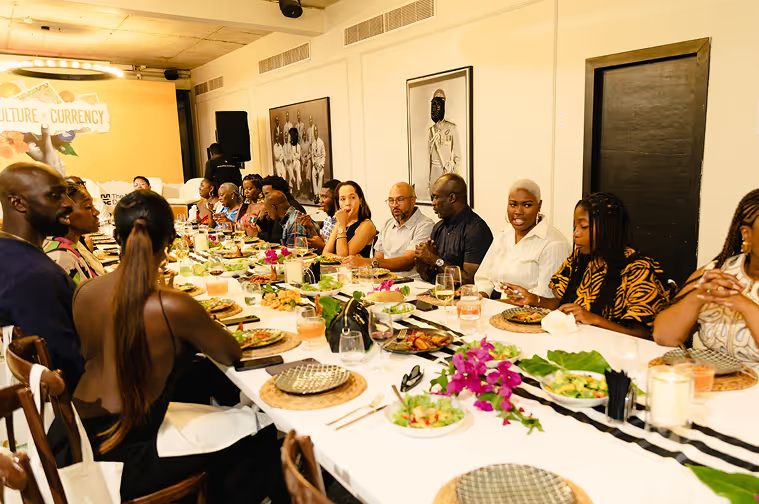
Walk through the creative hubs in Osu and East Legon, talk to the directors coming out of the National Film and Television Institute, and you find something that feels like the beginning of something real. There is a seriousness to the conversation — a willingness to engage with documentary tradition, experimental form, stories that are not about poverty or conflict. The scene does not need saving. It needs attention and the infrastructure that attention eventually enables.
What the Work Actually Looks Like
The films coming out of this scene are not trying to be Nollywood. They are not trying to be anything other than what they are — Ghanaian films, made by Ghanaians, about things that matter to Ghanaians, with aesthetic choices that reflect specific influences and specific intentions. The documentary work in particular has a rigor and a willingness to sit with complexity that distinguishes it from both commercial African cinema and Western documentary conventions.
"We're not making films for festivals. We're making films for Ghanaians. If festivals follow, fine."
Why This Matters Beyond Accra
A generation of Ghanaian filmmakers is building something quietly extraordinary in the city's creative districts. What they build will matter beyond Ghana because Ghanaian cinema, when it finally reaches the audiences it deserves, will offer something that is not available anywhere else: a specific, confident, formally serious engagement with Ghanaian reality. The scene does not need saving. It needs a pipeline. That pipeline is being built, slowly, by the filmmakers themselves.



%201.webp)
%201.png)
