




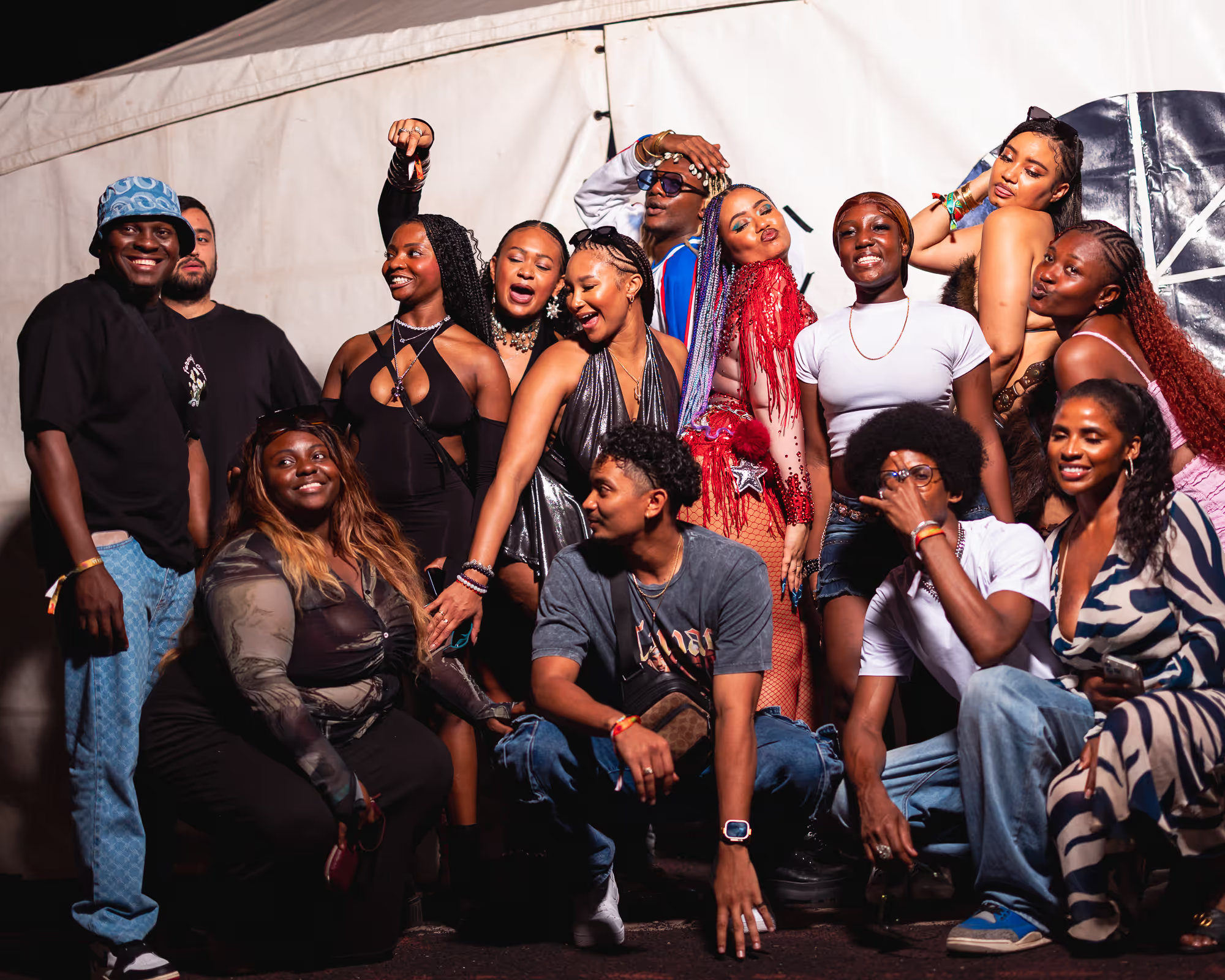
The conversation used to be about leaving. Which city offered the best visa, the best opportunities, the best chance at the version of success that parents who immigrated in the 1980s had worked toward. London. New York. Toronto. That conversation has shifted, and the shift is more structural than it appears.
Why the Math Has Changed
Remote work has decoupled income from location. Tech ecosystems on the continent are generating real career opportunities. The quality of life available in a city like Accra — for someone earning in dollars or pounds — is genuinely difficult to replicate in London on a comparable budget. The social infrastructure — family, community, cultural familiarity — is there in a way it cannot be fully replicated in a diaspora context. The calculus has changed. People are doing the math differently.
Six Voices, One Shift
We spoke to six people who left London, New York, and Toronto for Accra, Lagos, and Nairobi. Their reasons are varied — family, burnout, opportunity, a sense of wanting to be part of something being built rather than something already built — but they share a quality of deliberateness. These are not people who drifted back. These are people who chose to return with intention and with a clear sense of what they were coming to do.
What They're Building
The more interesting question is what this generation is building when they arrive. They come with skills, networks, and capital that previous generations of returnees rarely had at the same scale. The institutions they are building, the businesses they are starting, the creative scenes they are joining will define what these cities look and feel like in ten years. The returnee effect is visible and accelerating.
"I left because I thought opportunity was somewhere else. I came back because I realized opportunity is what you make, and I'd rather make it here."
What This Means for the Cities
The cities receiving returnees are changing in response. Neighborhoods that were moribund five years ago are becoming creative districts. Restaurant scenes that were thin are becoming rich. The creative infrastructure — studios, galleries, co-working spaces, event venues — is expanding to meet demand that wasn't there before the returnees arrived and is now substantial. The diaspora is coming home. The cities are being remade by their arrival.

%201.webp)
%201.png)
