




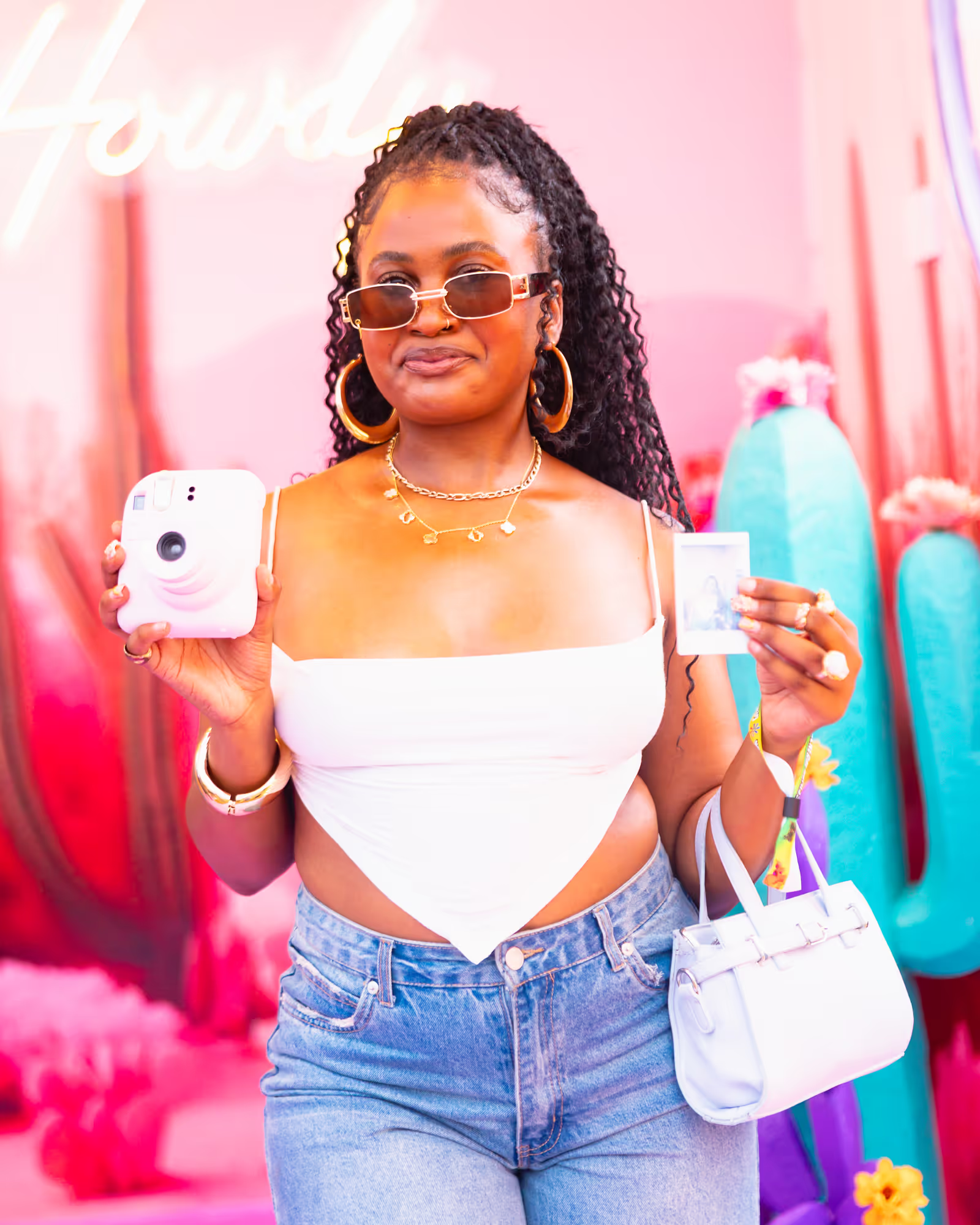
There is a list that does not exist officially but that anyone in fashion can feel taking shape — the African designers whose work is appearing in the wardrobes of the people whose wardrobes everyone else watches. Not as a diversity inclusion, not as a trend moment, but as a genuine curatorial choice.
What Genuine Curatorial Choice Looks Like
A genuine curatorial choice is different from a diversity gesture in a legible way: it is repeated, it is defended with specific aesthetic reasoning, and it is not contingent on external validation. The fashion editors and stylists and cultural figures who are choosing African designers are not doing it because it is expected. They are doing it because the work is genuinely the best option available for what they are trying to achieve. That distinction is everything.
What the Designers Have in Common
The designers earning this kind of attention have something in common: they are not making African fashion for a Western gaze. They are making fashion, full stop, deeply rooted in African craft traditions and silhouettes. The work is not legible as exotic or other. It is legible as exceptional — technically sophisticated, conceptually coherent, aesthetically distinct. The world is learning to see the difference.
The Infrastructure That's Still Missing
The gap between cultural recognition and commercial infrastructure remains significant. Designers whose work appears on the most stylish people in London are often still operating without the retail infrastructure, the wholesale relationships, or the production capacity to meet the demand that recognition creates. The recognition is real and growing. The infrastructure to capitalize on it is still being built.
"Being the best-dressed person's favorite designer is wonderful. Being able to actually sell them the clothes is a different conversation."
What Dressing the World's Most Stylish People Actually Means
It is taking its time buying things from people who have always known it — but it is buying. Slowly, then all at once, the same way everything in fashion actually changes. The list is getting longer. The infrastructure is developing. The moment when African designers are not a notable subset of the global fashion conversation but simply part of it — unremarkably, as a matter of course — is closer than it has ever been.

%201.webp)
%201.png)
