



Behind nearly every hit record is a conversation the public rarely gets to hear. For African music, that conversation has historically been dominated by male voices — in studios, in boardrooms, on liner notes. That is changing, slowly and then all at once.
The Invisible Architecture
A growing cohort of female producers — many of them based in Lagos, Accra, and London — are not just contributing to Afrobeats; they are actively reshaping its sonic palette. Their fingerprints are on records that have topped global charts, even when their names don't make it to the credits. This is not a new problem in music, but it takes a particular form in Afrobeats, where the producer's role is often subordinated to the artist's charisma in the public narrative.
Three Voices, One Story
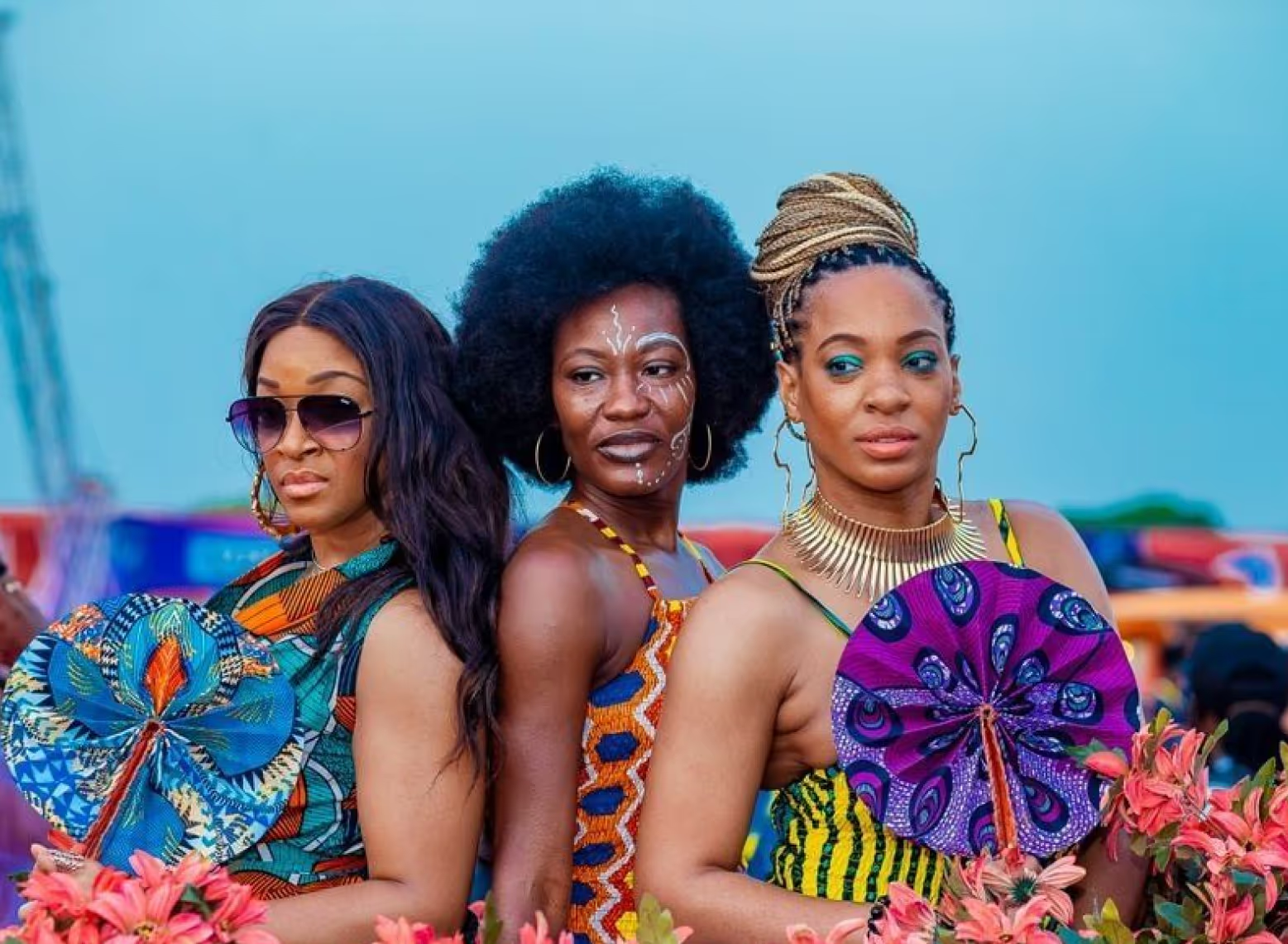
We spoke with three of them about craft, credit, and the particular kind of courage it takes to build a career in a room that wasn't designed for you. Their stories are different — one came up through classical training, one through YouTube tutorials and a secondhand laptop, one through a family of musicians who taught her to play before she could read. But the through line is consistent: they learned to be twice as good and take up space anyway.
On Credit and Ownership
The credit conversation is inseparable from the ownership conversation. Producers who don't have their names attached to records don't have leverage in future negotiations. Producers who don't have leverage can't set their own terms. The systemic nature of this problem means individual talent alone doesn't fix it — it requires a change in industry norms that is slowly, begrudgingly happening.
"The music doesn't care who made it. The industry cares. That's the problem we're solving."
This Is Their Moment
This is their moment — and they've been ready for it. The artists they work with are ready for it. The audiences, who have never particularly cared whether the producer was male or female as long as the music was right, have always been ready. The industry is the last thing to catch up. It's catching up.



%201.webp)
%201.png)
