Fashion

Africa's Streetwear Scene Is Writing Its Own Rulebook

Streetwear was supposed to be a Western export. The narrative was familiar: American and Japanese street culture produces a look, global youth culture adopts it, and the cycle continues. What has happened instead is something more interesting — and more complicated.

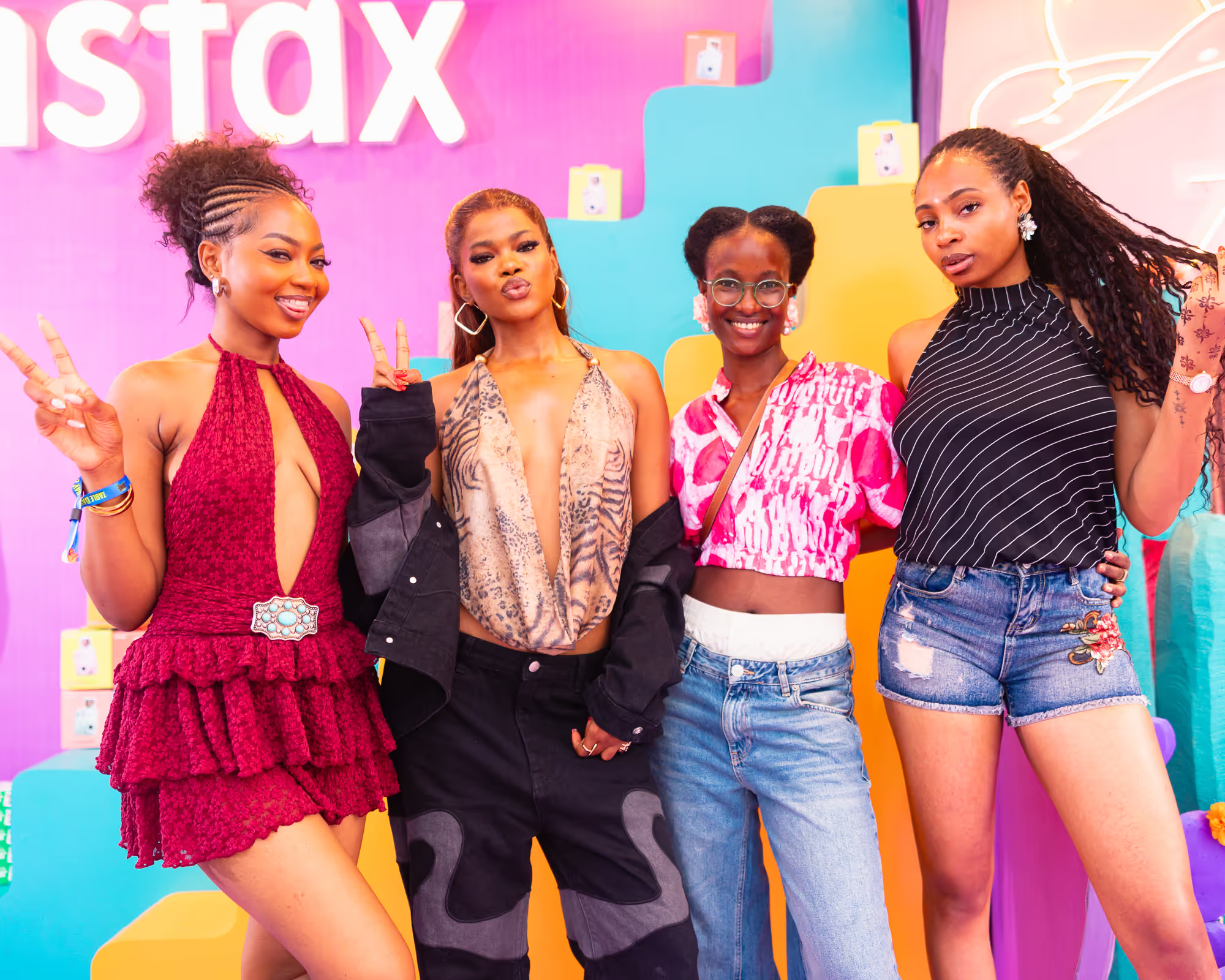
Lagos street style
Lagos street style is drawing reference from local sports culture, market aesthetics, and religious iconography rather than Western templates.
What African Streetwear Is Actually Drawing On

Across Lagos, Nairobi, Accra, and Johannesburg, young designers are making streetwear that draws on entirely different references: local sports culture, informal market aesthetics, religious iconography, music scenes that have nothing to do with hip-hop's American origins. The football jersey reimagined as a fashion object. The market trader's aesthetic elevated and made explicit. The church-going Sunday best deconstructed and reassembled as a weekday statement.

Globally Legible, Unmistakably African

The result is a version of streetwear that is globally legible but unmistakably African in its sensibility. It communicates across cultural distance because it uses a visual grammar — oversized fits, graphic elements, functional details — that streetwear has made universal. But what it says in that grammar is specific, rooted, and not available anywhere else. Several African streetwear brands have collaborated with major international labels in the past two years, consistently on their own terms.

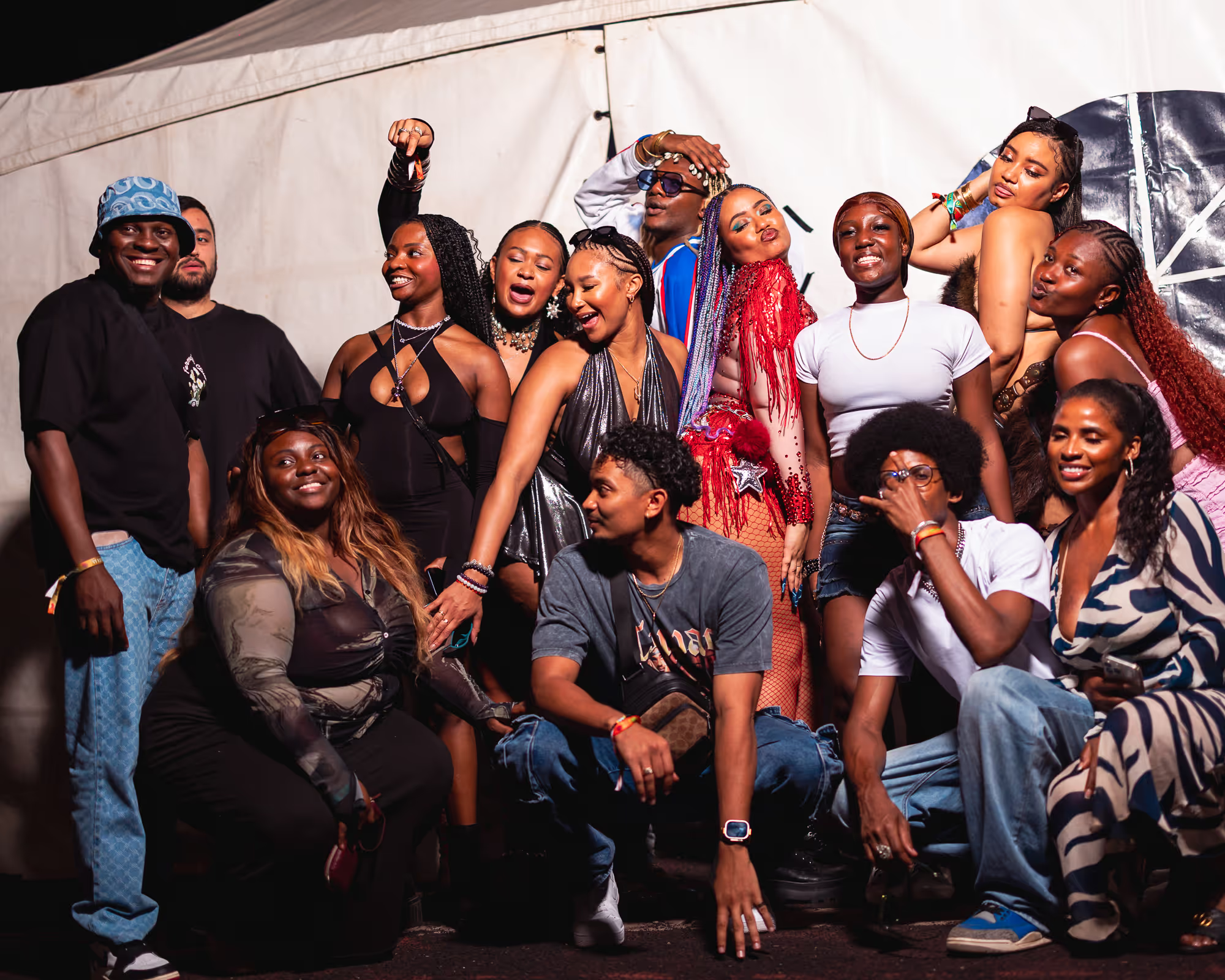
African streetwear campaign
African streetwear brands are increasingly being approached by international labels for collaboration rather than the other way around.
The Collaboration Dynamic

The collaborations are worth examining closely. In most cases, the international label is the one coming to the African brand with an ask, not the other way around. The African brand is the one with cultural cachet, the one whose aesthetic is being borrowed rather than doing the borrowing. That reversal in the usual direction of fashion influence is recent and significant.

"They come to us now. That's new. And we're very selective about who we say yes to." — Lagos streetwear founder
The Rulebook Being Written

Africa's streetwear scene is writing its own rulebook. The brands doing it best are the ones who understand they have something that can't be replicated: specificity. Specificity is the one thing that scale can't manufacture. It's the competitive advantage that no amount of marketing budget can buy. The world is paying attention. The scene knows it. And it's making it work on its own terms.
Fashion
Fashion

Africa's Streetwear Scene Is Writing Its Own Rulebook

Streetwear was supposed to be a Western export. The narrative was familiar: American and Japanese street culture produces a look, global youth culture adopts it, and the cycle continues. What has happened instead is something more interesting — and more complicated.

Lagos street style
Lagos street style is drawing reference from local sports culture, market aesthetics, and religious iconography rather than Western templates.
What African Streetwear Is Actually Drawing On

Across Lagos, Nairobi, Accra, and Johannesburg, young designers are making streetwear that draws on entirely different references: local sports culture, informal market aesthetics, religious iconography, music scenes that have nothing to do with hip-hop's American origins. The football jersey reimagined as a fashion object. The market trader's aesthetic elevated and made explicit. The church-going Sunday best deconstructed and reassembled as a weekday statement.

Globally Legible, Unmistakably African

The result is a version of streetwear that is globally legible but unmistakably African in its sensibility. It communicates across cultural distance because it uses a visual grammar — oversized fits, graphic elements, functional details — that streetwear has made universal. But what it says in that grammar is specific, rooted, and not available anywhere else. Several African streetwear brands have collaborated with major international labels in the past two years, consistently on their own terms.

African streetwear campaign
African streetwear brands are increasingly being approached by international labels for collaboration rather than the other way around.
The Collaboration Dynamic

The collaborations are worth examining closely. In most cases, the international label is the one coming to the African brand with an ask, not the other way around. The African brand is the one with cultural cachet, the one whose aesthetic is being borrowed rather than doing the borrowing. That reversal in the usual direction of fashion influence is recent and significant.

"They come to us now. That's new. And we're very selective about who we say yes to." — Lagos streetwear founder
The Rulebook Being Written

Africa's streetwear scene is writing its own rulebook. The brands doing it best are the ones who understand they have something that can't be replicated: specificity. Specificity is the one thing that scale can't manufacture. It's the competitive advantage that no amount of marketing budget can buy. The world is paying attention. The scene knows it. And it's making it work on its own terms.

The client came to the project with a website that had grown organically over time. New pages were added as needs appeared, sections were duplicated inconsistently, and messaging became fragmented.

The challenge

As the website grew, maintaining consistency became increasingly challenging. Different pages followed different layout patterns, spacing varied across sections, and typography lost its hierarchy. Important messages were often repeated or buried, making it harder for visitors to quickly understand the offering.

Internally, the team struggled to update the site efficiently. Adding new pages required design decisions each time, slowing down iteration and increasing the risk of inconsistency. The existing setup no longer supported the pace or scale of the organization.

The approach

The solution began with a shift in mindset — from page-by-page design to system-first thinking. Truebase was used as the structural framework to redefine how content should be organized, presented, and scaled.

Core page types were identified first, followed by a clear hierarchy of content elements. Layouts were built using a consistent grid and spacing system, while typography was simplified into a scalable hierarchy that could accommodate varying content lengths. Every decision prioritized clarity and reuse.

The implementation

The website was rebuilt using modular sections that could be reused across multiple pages without visual drift. Each section followed predefined spacing and alignment rules, ensuring consistency regardless of where it appeared.

Content was restructured to highlight key information earlier and reduce unnecessary repetition. Dedicated layouts were introduced for case studies, metrics, and supporting content, improving readability and flow. The CMS was organized to support ongoing updates, allowing the team to manage content without breaking the underlying system.

After launch, the impact was immediately noticeable. The team was able to create and update pages faster, without needing design adjustments for each new piece of content. The website felt calmer, more predictable, and easier to navigate.

From a visitor perspective, the clearer structure reduced friction. Users could understand the offering more quickly, with less scrolling and fewer explanations required. The website began functioning as a reliable communication tool rather than a static presentation.

48%
Reduction in time required publish pages
32%
Increase in engagement

Heading 1

Heading 2

Heading 3

Heading 4

Heading 5
Heading 6

Lorem ipsum dolor sit amet, consectetur adipiscing elit, sed do eiusmod tempor incididunt ut labore et dolore magna aliqua. Ut enim ad minim veniam, quis nostrud exercitation ullamco laboris nisi ut aliquip ex ea commodo consequat. Duis aute irure dolor in reprehenderit in voluptate velit esse cillum dolore eu fugiat nulla pariatur.

Block quote

Ordered list

  1. Item 1
  2. Item 2
  3. Item 3

Unordered list

  • Item A
  • Item B
  • Item C

Text link

Bold text

Emphasis

Superscript

Subscript