Music

Inside the Highlife Revival Happening Right Now

Highlife never really went away. It went underground, it went abroad, it got sampled and borrowed and filtered through other genres — but it survived. What's happening now feels different from preservation. It feels like rediscovery.

Live highlife performance
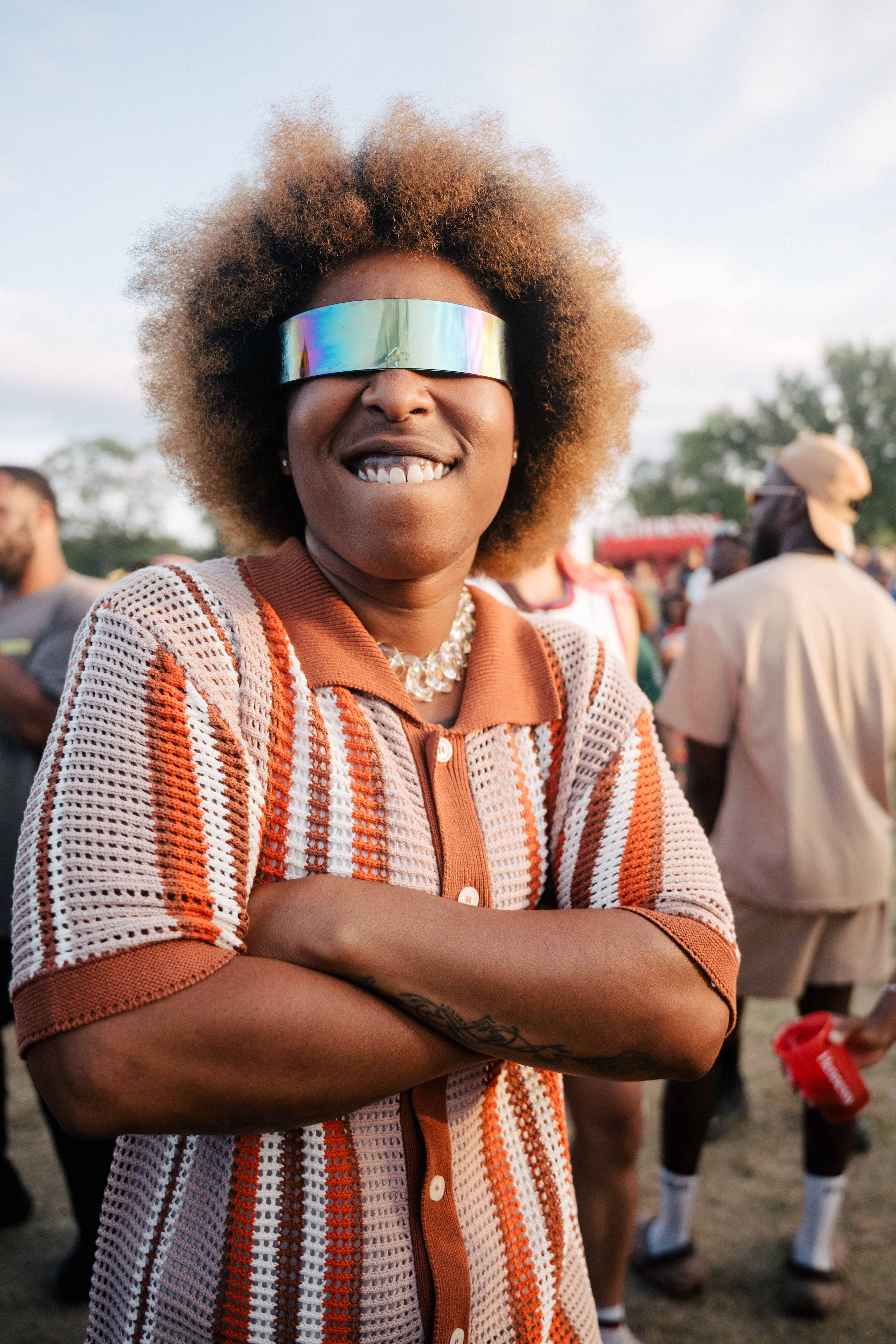
New highlife acts are filling venues across Accra with audiences spanning multiple generations.
What Highlife Actually Is

Before we talk about the revival, the form itself deserves some context. Highlife emerged in Ghana in the early twentieth century as a fusion of indigenous Akan musical traditions with Western brass band instrumentation brought by British colonizers. The name came from the aspirational social context in which it was first performed — the ballrooms and clubs of the colonial elite. It was music from the margins playing at the center, which gave it a particular kind of tension that has never fully resolved.

The Collective Making It New

In Accra, a loose collective of musicians in their twenties and thirties are making highlife that doesn't sound like a museum exhibit. They're bringing in electronic production, jazz harmony, and spoken word, creating something that honors the tradition without being imprisoned by it. Several of them spent time studying music abroad and returned with technical vocabulary they could apply to a form they grew up hearing in their grandparents' homes.

Accra recording studio
Accra's East Legon neighbourhood has become the informal centre of the highlife revival.
Who's Listening

The result is music that Ghanaian grandparents and their grandchildren can sit with simultaneously — and that international audiences, hungry for something with this much history and warmth, are responding to in droves. Streaming numbers for the genre have tripled in eighteen months. Festival bookers across Europe are asking questions they weren't asking two years ago.

"Highlife is what Ghana sounds like when it's honest about itself."
Not Nostalgia. Something Better.

The highlife revival isn't nostalgia. It's an argument about what Ghanaian music can be going forward — an insistence that the tradition contains enough to build on without having to borrow from somewhere else. That's a significant thing to say in a moment when every genre is being pushed toward convergence. Highlife is choosing divergence. And it's right to.
Music
Music

Inside the Highlife Revival Happening Right Now

Highlife never really went away. It went underground, it went abroad, it got sampled and borrowed and filtered through other genres — but it survived. What's happening now feels different from preservation. It feels like rediscovery.

Live highlife performance
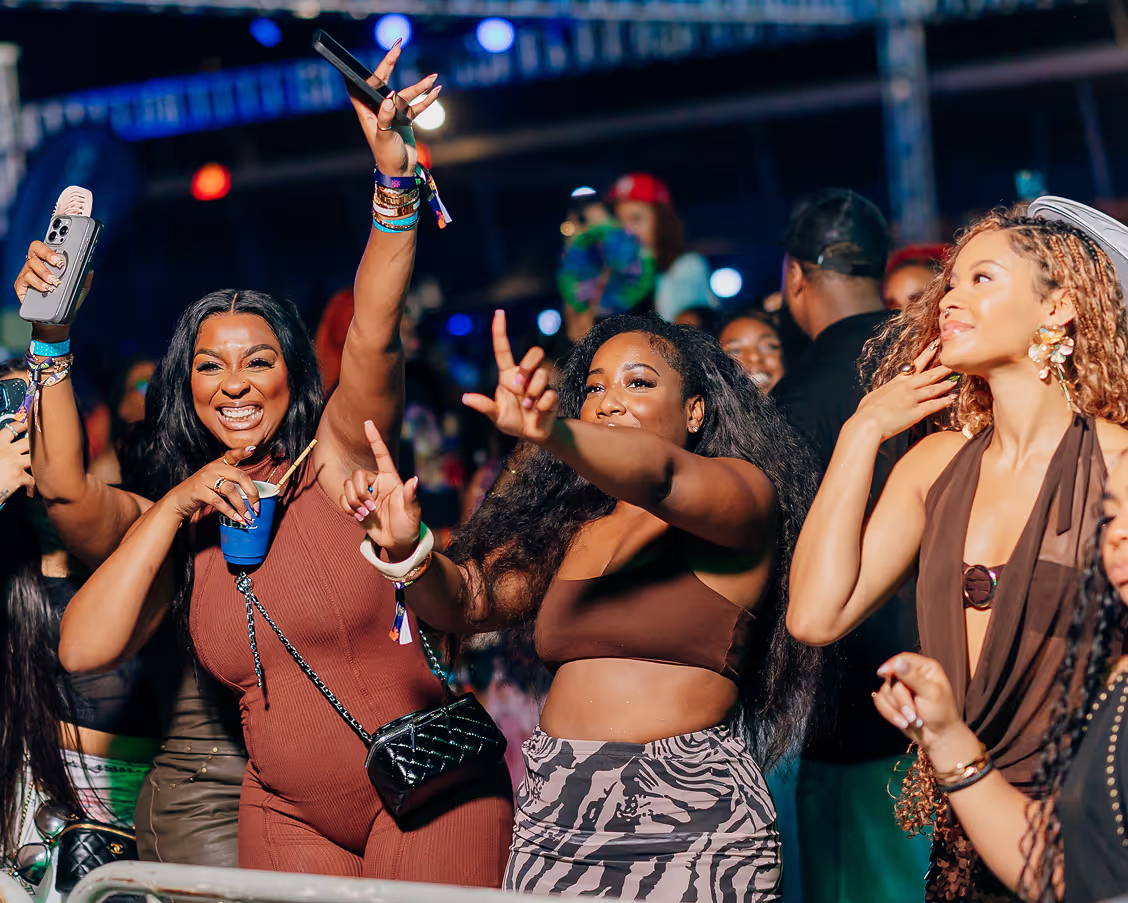
New highlife acts are filling venues across Accra with audiences spanning multiple generations.
What Highlife Actually Is

Before we talk about the revival, the form itself deserves some context. Highlife emerged in Ghana in the early twentieth century as a fusion of indigenous Akan musical traditions with Western brass band instrumentation brought by British colonizers. The name came from the aspirational social context in which it was first performed — the ballrooms and clubs of the colonial elite. It was music from the margins playing at the center, which gave it a particular kind of tension that has never fully resolved.

The Collective Making It New

In Accra, a loose collective of musicians in their twenties and thirties are making highlife that doesn't sound like a museum exhibit. They're bringing in electronic production, jazz harmony, and spoken word, creating something that honors the tradition without being imprisoned by it. Several of them spent time studying music abroad and returned with technical vocabulary they could apply to a form they grew up hearing in their grandparents' homes.

Accra recording studio
Accra's East Legon neighbourhood has become the informal centre of the highlife revival.
Who's Listening

The result is music that Ghanaian grandparents and their grandchildren can sit with simultaneously — and that international audiences, hungry for something with this much history and warmth, are responding to in droves. Streaming numbers for the genre have tripled in eighteen months. Festival bookers across Europe are asking questions they weren't asking two years ago.

"Highlife is what Ghana sounds like when it's honest about itself."
Not Nostalgia. Something Better.

The highlife revival isn't nostalgia. It's an argument about what Ghanaian music can be going forward — an insistence that the tradition contains enough to build on without having to borrow from somewhere else. That's a significant thing to say in a moment when every genre is being pushed toward convergence. Highlife is choosing divergence. And it's right to.

The client came to the project with a website that had grown organically over time. New pages were added as needs appeared, sections were duplicated inconsistently, and messaging became fragmented.

The challenge

As the website grew, maintaining consistency became increasingly challenging. Different pages followed different layout patterns, spacing varied across sections, and typography lost its hierarchy. Important messages were often repeated or buried, making it harder for visitors to quickly understand the offering.

Internally, the team struggled to update the site efficiently. Adding new pages required design decisions each time, slowing down iteration and increasing the risk of inconsistency. The existing setup no longer supported the pace or scale of the organization.

The approach

The solution began with a shift in mindset — from page-by-page design to system-first thinking. Truebase was used as the structural framework to redefine how content should be organized, presented, and scaled.

Core page types were identified first, followed by a clear hierarchy of content elements. Layouts were built using a consistent grid and spacing system, while typography was simplified into a scalable hierarchy that could accommodate varying content lengths. Every decision prioritized clarity and reuse.

The implementation

The website was rebuilt using modular sections that could be reused across multiple pages without visual drift. Each section followed predefined spacing and alignment rules, ensuring consistency regardless of where it appeared.

Content was restructured to highlight key information earlier and reduce unnecessary repetition. Dedicated layouts were introduced for case studies, metrics, and supporting content, improving readability and flow. The CMS was organized to support ongoing updates, allowing the team to manage content without breaking the underlying system.

After launch, the impact was immediately noticeable. The team was able to create and update pages faster, without needing design adjustments for each new piece of content. The website felt calmer, more predictable, and easier to navigate.

From a visitor perspective, the clearer structure reduced friction. Users could understand the offering more quickly, with less scrolling and fewer explanations required. The website began functioning as a reliable communication tool rather than a static presentation.

48%
Reduction in time required publish pages
32%
Increase in engagement

Heading 1

Heading 2

Heading 3

Heading 4

Heading 5
Heading 6

Lorem ipsum dolor sit amet, consectetur adipiscing elit, sed do eiusmod tempor incididunt ut labore et dolore magna aliqua. Ut enim ad minim veniam, quis nostrud exercitation ullamco laboris nisi ut aliquip ex ea commodo consequat. Duis aute irure dolor in reprehenderit in voluptate velit esse cillum dolore eu fugiat nulla pariatur.

Block quote

Ordered list

  1. Item 1
  2. Item 2
  3. Item 3

Unordered list

  • Item A
  • Item B
  • Item C

Text link

Bold text

Emphasis

Superscript

Subscript