Before the engines
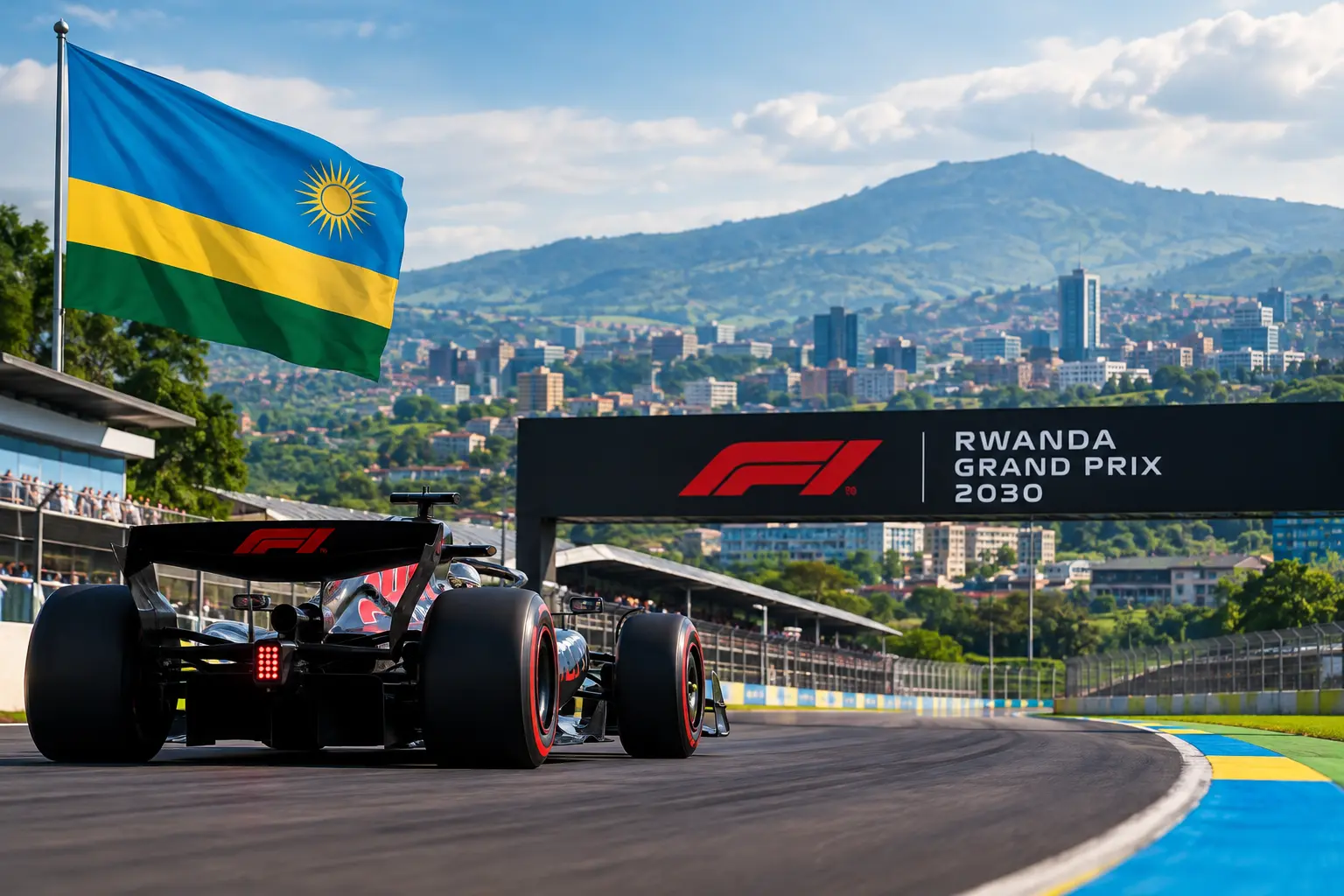
On 13 October, Formula 1 signed a ten year deal to bring the African Grand Prix to Rwanda. The race is set to join the calendar in the early 2030s. It will be the first time the sport has raced on this continent since 1993.
It is easy to read that as the moment Africa finally gets its horsepower. The truth runs the other way. Long before anyone built an engine, this continent was riding.
Even the word gives it away. When James Watt needed to sell his steam engines, he measured them against the animal people already trusted. He called the unit horsepower. Every F1 engine that arrives in Kigali will still be rated against a horse.
So before the engines roar, we want to look back at the hooves. This is a story more than 3,000 years long, and it belongs to us.
Kings who buried their horses
In ancient Nubia, in what is now northern Sudan, the kingdom of Kush treated horses as royalty. King Piye, who ruled around 750 BC, loved his horses so deeply that they were buried standing, in their own graves, beside the royal tombs at el-Kurru. Kushite horses were famous across the ancient world.
Centuries later, the great empires of the Sahel rose on horseback. Mali, Songhai and Kanem-Bornu ruled with cavalry. Armoured riders crossed the savannah, and horses became one of the most valuable goods traded across the Sahara. In those courts, a horse was not transport. It was wealth, rank and power you could see from a distance.
Senegal: a king, a horse and a railway
Lat Dior was the last great Damel, or king, of Cayor in Senegal. When the French planned a railway across his land to Dakar, he saw it for what it was: a line of control. He is remembered for saying his horse Maalaw would never see that railway.
He kept his word. In 1886, Lat Dior and Maalaw fell together, on the same day and in the same place. Today a statue of Maalaw stands near the Great Mosque in Dakar. In December 2024, Thiès unveiled a bronze of Lat Dior riding Maalaw, inaugurated by President Bassirou Diomaye Faye.
That love of the horse never left. Racing in Senegal rivals wrestling and football. Every Sunday, crowds fill the Ndiaw Macodou Diop racecourse in Thiès, where teenage jockeys become local stars.
Photographer and horse breeder Moctar Ba has spent years inside that world. His exhibition La Course at Galerie36 in Dakar follows the riders, the breeders and the quiet bond built around the track. It runs until 13 November 2026, so there are still a few days to see it.
North Africa: the Barb and the charge
The Barb is one of the great horses of the world, and it comes from the Maghreb. Bred for centuries by the Amazigh people, it is fast, tough and made for the desert. Its bloodline runs through many breeds across Europe and the Americas, including early Thoroughbreds. In 2014, the International Equestrian Federation named the Barb its Horse of Honour.
In Morocco, the Barb is the star of Tbourida. A line of riders charges forward together. At one signal, every rider fires his rifle at the same moment, and the sound lands as one. It began as a memory of cavalry warfare. Today it is a living art, with nearly a thousand troupes across the country and a growing number of women riders. UNESCO listed it as intangible cultural heritage in 2021.
West Africa: festivals on horseback
In northern Nigeria, Eid arrives on horseback. The Durbar begins with prayers at dawn. Then the Emir rides out with his retinue of horsemen, drummers and musket men. Riders wear flowing robes, indigo turbans and jewelled harnesses, and noblemen come to pledge loyalty to the emirate. The tradition grew out of emirate cavalry, and in Kano it reaches back to the 14th century. Kano's four day Durbar is the most famous of them all.
Cross into northern Ghana and the drums keep going. Damba is celebrated by the Dagbon, Mamprugu, Gonja and Nanumba peoples. It marks the birth of the Prophet and honours the chiefs. Chiefs ride through Tamale and Yendi on horseback, surrounded by drummers, dancers and warriors firing muskets. On the final day, the horsemanship displays carry on into the night.
In both places, the horse is not a show animal. It is how a community shows who leads it, and who stands behind them.
Ethiopia and Lesotho: names and mountains
In Ethiopia, a horse could give a man his name. Nobles were known by the names of their horses, and Emperor Menelik II was called Abba Dagnew after his. In 1896, Oromo cavalry rode at the Battle of Adwa, where Ethiopia defeated an invading Italian army. The country stayed free, and the horse was part of how.
Far to the south, in the Maloti mountains of Lesotho, the horse took a different job. Horses came to the Basotho in the 19th century, and they became the transport of the highlands. They reach villages that roads still cannot. A rider wrapped in a Basotho blanket, wearing a mokorotlo hat, on a sure footed pony along a ridge: few images say Southern Africa so clearly. In Semonkong, horsemen still race in the mountain mist.
The Kentucky Derby: the riders history tried to forget
The story crossed the Atlantic too, and it did not lose its shape. When the first Kentucky Derby ran in 1875, 13 of its 15 jockeys were Black. The winner was Oliver Lewis, a 19 year old riding Aristides.
Black jockeys went on to win 15 of the first 28 Derbies. Isaac Burns Murphy, the son of formerly enslaved parents, won three of them, in 1884, 1890 and 1891. He was the first jockey ever elected to the Racing Hall of Fame, and many still call him the greatest American rider of all time.
Then Jim Crow closed the track to them. Jimmy Winkfield won back to back Derbies in 1901 and 1902, and he became the last Black jockey to win the race. Pushed out at home, he left to ride in Russia and France, won more than 2,600 races, and died near Paris in 1974. The sport they built forgot them for a century.
Still riding
The line was never broken. Black cowboys still ride through Compton and Philadelphia. The Durban July has run since 1897. Polo grounds fill in Lagos and Accra, and wild horses still roam the Nami
So when the cars line up on the grid in Rwanda, remember what came first. The engines are coming. The horsepower was always ours.
Which equestrian tradition did you grow up around? Tell us in the comments, and find more Heritage Forward stories at afrofuture.com.
The client came to the project with a website that had grown organically over time. New pages were added as needs appeared, sections were duplicated inconsistently, and messaging became fragmented.
The challenge
As the website grew, maintaining consistency became increasingly challenging. Different pages followed different layout patterns, spacing varied across sections, and typography lost its hierarchy. Important messages were often repeated or buried, making it harder for visitors to quickly understand the offering.
Internally, the team struggled to update the site efficiently. Adding new pages required design decisions each time, slowing down iteration and increasing the risk of inconsistency. The existing setup no longer supported the pace or scale of the organization.
The approach
The solution began with a shift in mindset — from page-by-page design to system-first thinking. Truebase was used as the structural framework to redefine how content should be organized, presented, and scaled.
Core page types were identified first, followed by a clear hierarchy of content elements. Layouts were built using a consistent grid and spacing system, while typography was simplified into a scalable hierarchy that could accommodate varying content lengths. Every decision prioritized clarity and reuse.
The implementation
The website was rebuilt using modular sections that could be reused across multiple pages without visual drift. Each section followed predefined spacing and alignment rules, ensuring consistency regardless of where it appeared.
Content was restructured to highlight key information earlier and reduce unnecessary repetition. Dedicated layouts were introduced for case studies, metrics, and supporting content, improving readability and flow. The CMS was organized to support ongoing updates, allowing the team to manage content without breaking the underlying system.


After launch, the impact was immediately noticeable. The team was able to create and update pages faster, without needing design adjustments for each new piece of content. The website felt calmer, more predictable, and easier to navigate.
From a visitor perspective, the clearer structure reduced friction. Users could understand the offering more quickly, with less scrolling and fewer explanations required. The website began functioning as a reliable communication tool rather than a static presentation.